
LEED V4.1 CERTIFICATION
LEED stands for Leadership in Energy and Environmental Design and is globally recognized as one of the most popular green building certification programs. Developed by the U.S. Green Building Council, LEED promotes more sustainable buildings.
The LEED rating system includes a combination of practices from the fields of architecture to construction. All building types can register for LEED due to the flexible nature of this certification. It applies to the whole building lifecycle, including design, maintenance operations and renovation projects.
A scoring system monitors which environmental categories the LEED project falls into to acquire the certification. Projects aiming to become LEED Platinum must comply with all the elements in the rating systems, including reducing carbon emissions, improving energy efficiency, and protecting the environment around the project.
Saint-Gobain Glass contributions per category
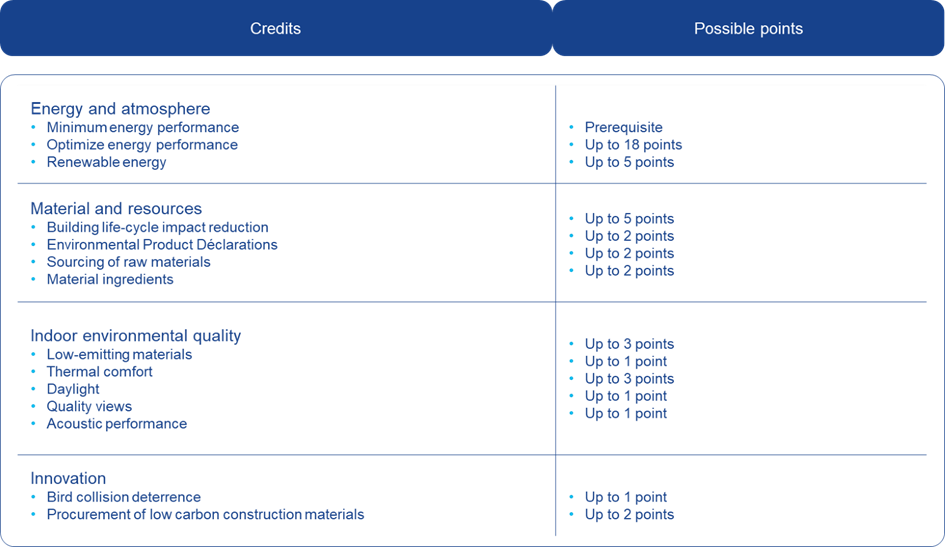
Energy and atmosphere
Energy performance
Our energy-efficient glazing is designed to help you achieve significant energy savings across lighting, heating, and cooling requirements. We have fine-tuned the Low-E and solar control properties of our glass specifically for this purpose, ensuring that you can find the ideal glazing solution regardless of your climatic zone. Our digital tool Calumen® allows you to calculate precise technical details, aiding in the selection of the perfect glass configuration for your project.
Renewable energy
Once you’ve optimized your building's energy performance with our glass solutions, you can meet the remaining energy demands through locally generated renewable energies. How? By integrating photovoltaic solar panels into your building's design. Our Building-Integrated Photovoltaic (BIPV) solutions can be incorporated into the façade or roof of any building, converting sunlight directly into electricity.
Material and resources
Life Cycle Assessment (LCA) – Environmental Product Declarations (EPDs)
We can supply verified EPDs for the majority of Saint-Gobain Glass products. These EPDs empower you to conduct a comprehensive life cycle assessment of your project. Read more in our dedicated webpage.
Material ingredients
Our raw glass products comply with European Union Regulation 1907/2006/EC (REACH), related to hazardous substances, thus safeguarding the well-being of both workers and building occupants. Moreover, we proudly hold Cradle to Cradle Certified® V4.0 at Bronze level across all five categories for some of our products, highlighting our dedication to more sustainable practices and materials. We also published Health Product Declarations (HPDs).
Sourcing of raw materials
To meet our objectives of reducing the use of virgin raw materials in our products, we are implementing a circular model to produce our glass by increasing the percentage of cullet collected from external sources. We developed a network of partners for glass recycling first in France and Sweden, and we aim to expand this network to cover our floats' needs in other countries. We transparently disclose the percentage of cullet utilized in our flat glass production through recycled content declarations.
In 2022, we launched our range ORAÉ®, the first low-carbon glass on the market. One of the several reasons that facilitated the achievement of the lowest carbon footprint on the market was the use of a high percentage of 64% recycled content.
Indoor environmental quality
Low emitting materials
Ensuring optimal indoor environmental quality is paramount for the health and well-being of building occupants. Our glass solutions play a crucial role in achieving this goal through several key features. Firstly, glass is an inherent material, minimizing Volatile Organic Compounds (VOCs) that can affect indoor air quality. Our laminated glass, such as STADIP®, utilizes PVB interlayers that emit very limited quantities of VOCs, earning our glass the highest score of A+ according to French VOC standards.
Thermal comfort
Moreover, we prioritize thermal comfort by enhancing the energy performance of our glass, which includes reducing heat losses and preventing overheating. Our coatings contribute to the optimization of indoor temperatures, ensuring year-round comfort without excessive energy consumption, regardless of the climate zone.
Daylight
We recognize the importance of natural daylight for occupant well-being. Our glass products are engineered to optimize light and solar energy transmission while minimizing glare, allowing occupants to enjoy natural light and outdoor views without compromising comfort or energy efficiency.
Acoustic performance
Additionally, our laminated glass options can include acoustic films, providing superior sound isolation to shield occupants from external noise sources.
Innovation
As part of the 100 Global Innovators for the tenth year in a row, we at Saint-Gobain Glass put innovation at the heart of our strategy. We constantly innovate and improve our products to meet today’s needs.
Bird collision deterrence
For instance, our 4BIRD® range of bird-friendly glass solutions was designed to protect birds from collisions with glass surfaces while ensuring high energy efficiency of the glazing.
Procurement of low carbon construction materials
In addition to these advancements, we are proud to have launched ORAÉ®, the first low carbon glass on the market. ORAÉ® boasts an impressive 42% reduction in CO2 emissions compared to our standard clear glass, PLANICLEAR®. This remarkable achievement is made possible by using renewable energy and incorporating a high percentage of recycled content in its production. Furthermore, ORAÉ® has a verified EPD, providing transparent environmental data for informed decision-making.
We can also provide you with a detailed document outlining the potential contribution of Saint-Gobain Glass products to achieve the LEED certification for your project.
Discover more solutions from Saint-Gobain
Looking to go even further in your sustainable building journey? Saint-Gobain Glass is proud to be part of a broader ecosystem of expert brands that bring added value to construction. Vetrotech Saint-Gobain delivers advanced fire-resistant and safety glazing solutions, while SageGlass offers cutting-edge dynamic glass that adapts to sunlight in real time—enhancing comfort, energy efficiency, and design flexibility. Discover how these innovative solutions can support you by visiting their websites.