

DECARBONIZATION OF FLAT GLASS MANUFACTURING
DESIGN OF A HYBRID MID-SIZED PILOT FURNACE VOLTA PROJECT
Saint-Gobain Glass and AGC, global manufacturers of flat glass, are collaborating to develop an innovative pilot flat glass production line expected to significantly reduce its direct CO2 emissions. Within this research and development initiative, AGC's Barevka patterned glass production line in the Czech Republic will undergo a complete overhaul to become a cutting-edge facility, aiming to operate with 50% electrification and 50% utilization of a combination of oxygen and gas.
This upgraded furnace will serve as a proof-of-concept to demonstrate the feasibility of implementing such technologies in large float glass furnaces. Funding for this R&D project has been provided by the Innovation Fund of the European Union.
ABOUT THE R&D PROJECT
The aim of the project is to develop and construct an innovative hybrid glass furnace that combines electric melting with oxy-gas combustion. This integrated approach offers an alternative to the predominantly natural gas-fired flat glass sector. The highly electrified furnace presents a more cost-effective and scalable solution for reducing CO2 emissions in the flat glass industry compared to other clean options, such as full clean hydrogen combustion.
The new design will undergo a trial run in collaboration between AGC and Saint-Gobain Glass at AGC's existing patterned glass furnace in Barevka, Czech Republic. It is anticipated that the hybrid furnace will decrease scope 1 and 3 emissions at the pilot site by 75% compared to the reference scenario.
ABOUT THE TECHNOLOGY
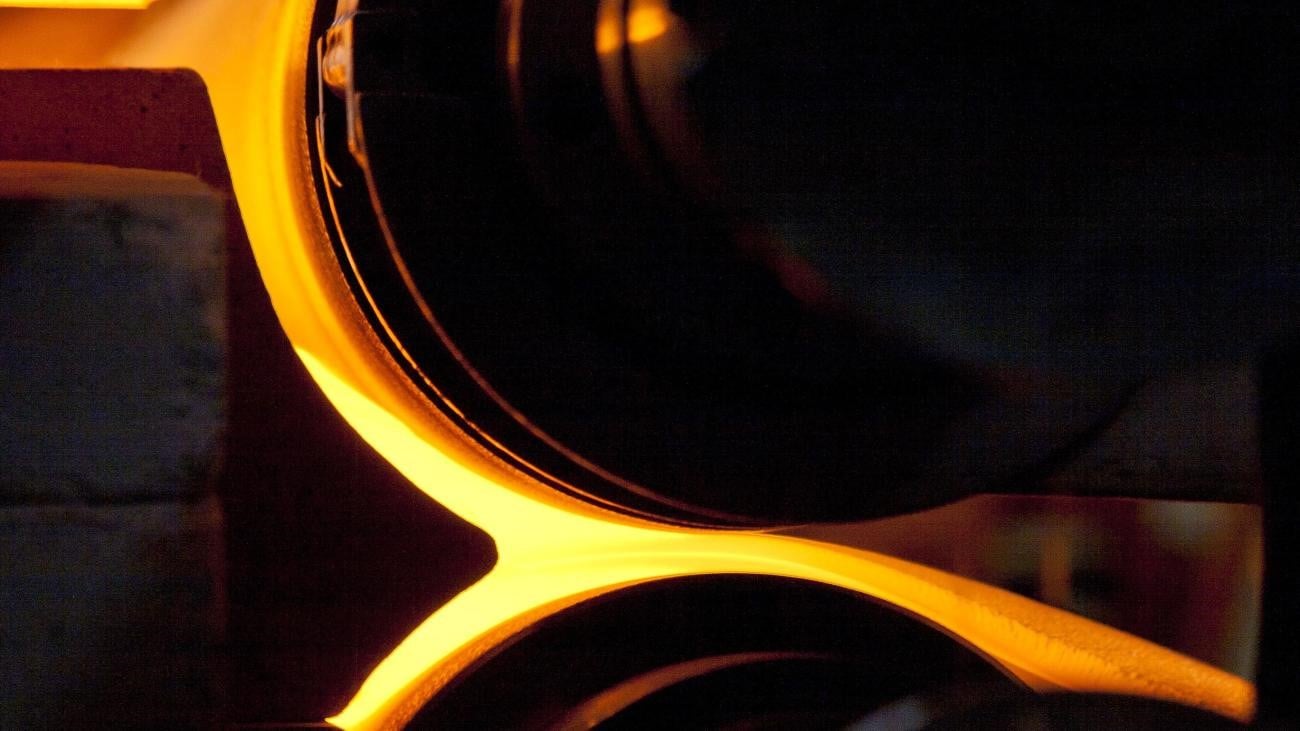
This pioneering technology integrates all-electric melting and oxy-gas combustion within a single furnace, marking a significant advancement in glass production. This approach allows for a 50% electrification rate while maintaining the high-quality standards essential for float glass. Additionally, the project's sustainability model will be enhanced by substituting virgin raw materials with up to 100% recycled glass.
The flat glass industry contributes approximately 5.3 million tons of CO2[1] equivalent in direct emissions annually in Europe, with approximately 75% stemming from natural gas combustion and the remaining 25% from raw materials[2]. Consequently, the innovative furnace is anticipated to substantially reduce energy-related emissions, with a projected emission reduction of over 193,000 tonnes of CO2 equivalent during the initial decade of operation.
[1] Verified emissions of 2022 of the 42 flat glass installations in Europe registered in the EU ETS https://ec.europa.eu/clima/ets/transaction.do?languageCode=en
CONTRIBUTING TO THE REPOWEREU PLAN
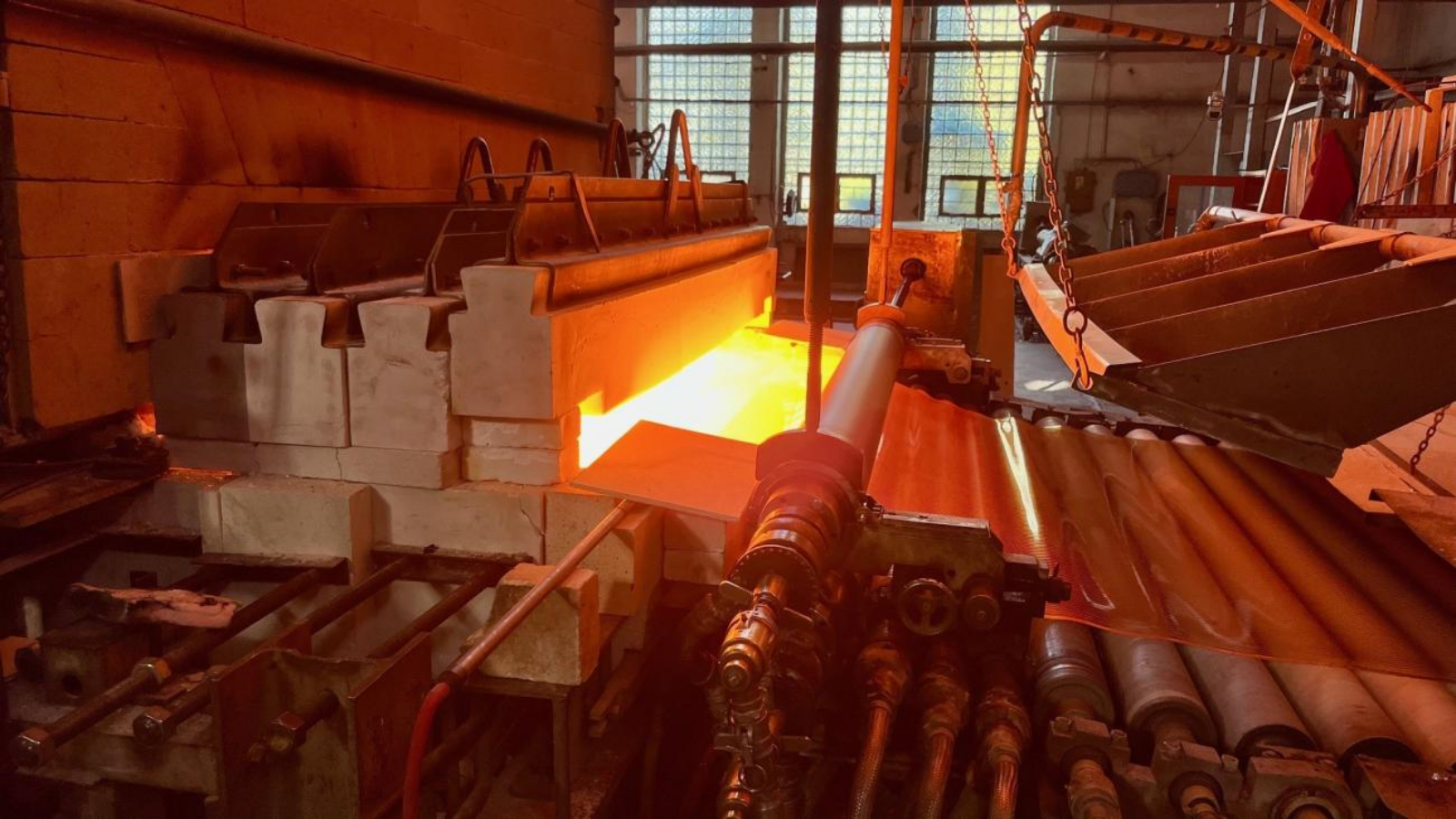
The project aligns with the European objectives outlined in the REPowerEU communication, aiming to diminish fossil fuel usage in both industry and transportation through the implementation of innovative technologies and electrification.
Moreover, we expect that the project will generate positive socio-economic impacts at the regional level. While the current output at the Barevka site stands at approximately 90 tonnes of glass per day, there is significant potential for scalability, particularly with the adoption of technology at larger production facilities ranging from 600 to 800 tonnes daily.
Additionally, there exists considerable potential for replication across Europe, given that the industry presently manufactures approximately 10 million tonnes of glass annually[2] and serves as a vital supplier to sectors such as construction, automotive, and consumer goods. Therefore, the technology holds promise in advancing the decarbonization efforts of critical sectors like construction and automotive, all while maintaining the competitiveness of the EU flat glass industry.
[2] https://glassforeurope.com/wp-content/uploads/2020/01/flat-glass-climate-neutral-europe.pdf
COLD REPAIR OF THE PLANT IN BAREKVA STARTED
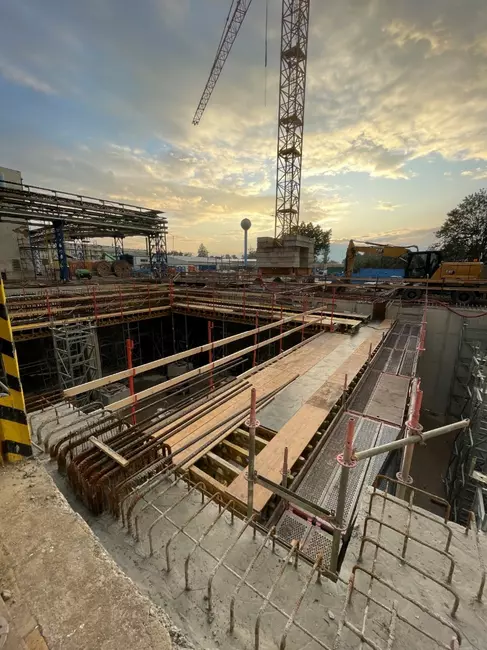
The existing furnace for manufacturing patterned glass in Barevka, Czech Republic, has been halted for the scheduled cold repair. The line will undergo major revamping to accommodate the brand-new furnace design, aiming to reduce direct CO2 emissions by 75%.
As announced in 2023, in the frame of this joint development project, Saint-Gobain Glass and AGC Group have combined their best available complementary technologies to design the best possible hybrid furnace of the future for flat glass manufacturing. This innovative technology will be tested in Barevka, Czech Republic, and aims to create a high-performing, state-of-the-art production line that is 50% electrified and 50% powered by a combination of oxygen and gas.
The plant designated for the project is currently undergoing a significant revamping to host the new technologies. Most of the studies and procurement processes have already been completed, and the team is actively coordinating the various professionals working on-site to construct the new furnace.
The next major steps involve preparing for production start-up. This includes a comprehensive and detailed commissioning and testing plan for all equipment and process components to ensure the proper start-up of the new furnace.
Additionally, it involves thorough training for the production team, who will be operating an entirely new industrial tool. The new furnace is expected to be operational by early 2025.
This R&D project called "Volta" project is funded by the Innovation Fund of the European Union*.

(*) Views and opinions expressed are however those of the author(s) only and do not necessarily reflect those of the European Union or the European Climate, Infrastructure and Environment Executive Agency (CINEA). Neither the European Union nor the granting authority can be held responsible for them.
Photos ongoing works
INAUGURATION OF VOLTA FLAT GLASS PRODUCTION LINE
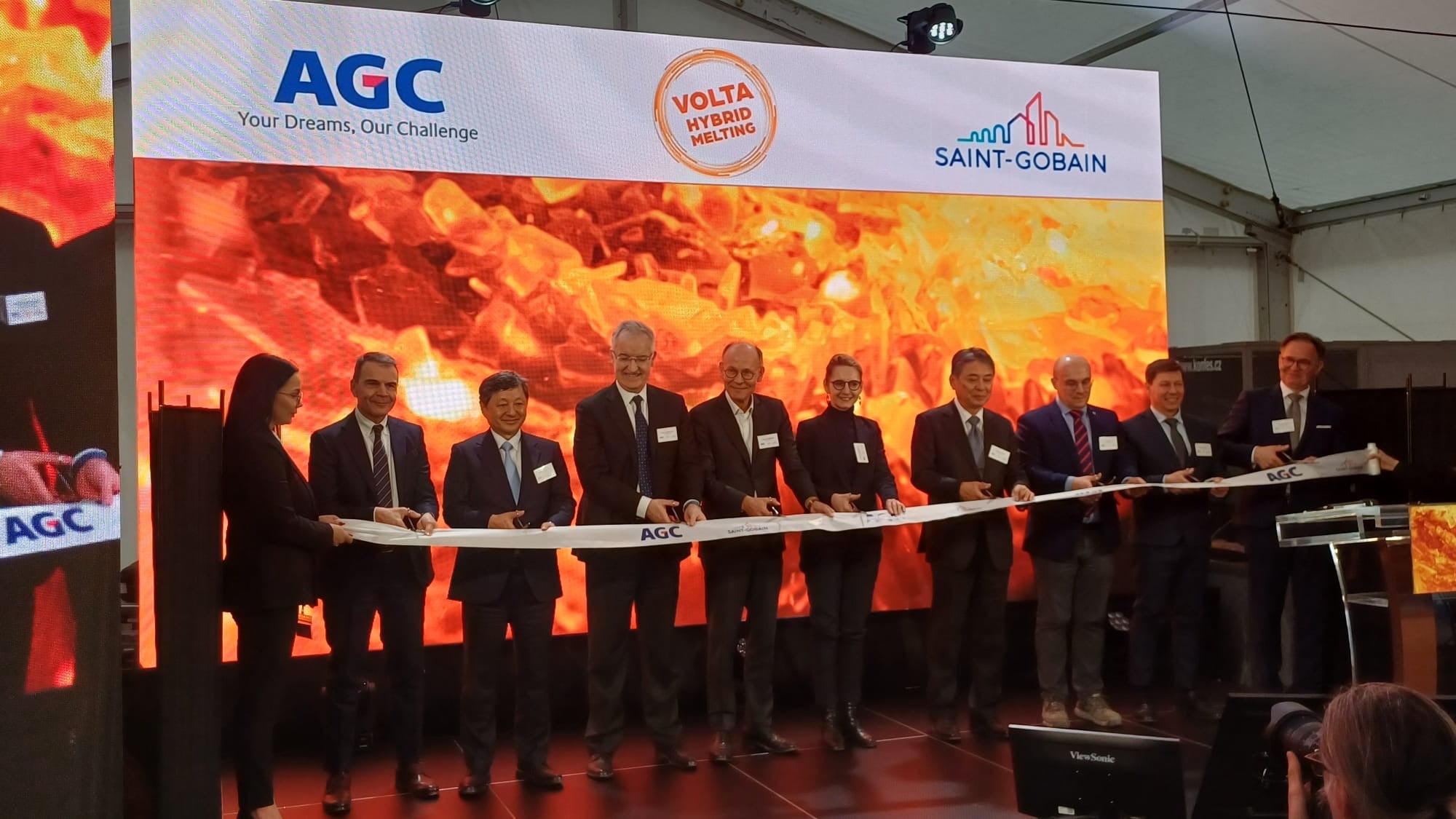
On February 12, 2025, another milestone has been reached: Saint-Gobain Glass and AGC officially inaugurated the Volta production line (AGC Barevka plant in Teplice, Czech Republic), joined by local authorities, stakeholders, and representatives from both companies.
This achievement marks a crucial step forward in the production trials set to take place over the next three years.
"Thrilled to see another major milestone of the Volta project come to life with the upcoming first trials. The new hybrid production line represents a key step on our journey toward achieving net zero carbon emissions by 2050, demonstrating our commitment to innovation and sustainability by significantly reducing CO₂ emissions." Cyril Jean, Saint-Gobain Glass Volta Project Manager
Copyrights of pictures: AGC / Saint-Gobain / Stocksy - Monica Murphy
ONE YEAR DEMONSTRATING HYBRID MELTING AT INDUSTRIAL SCALE
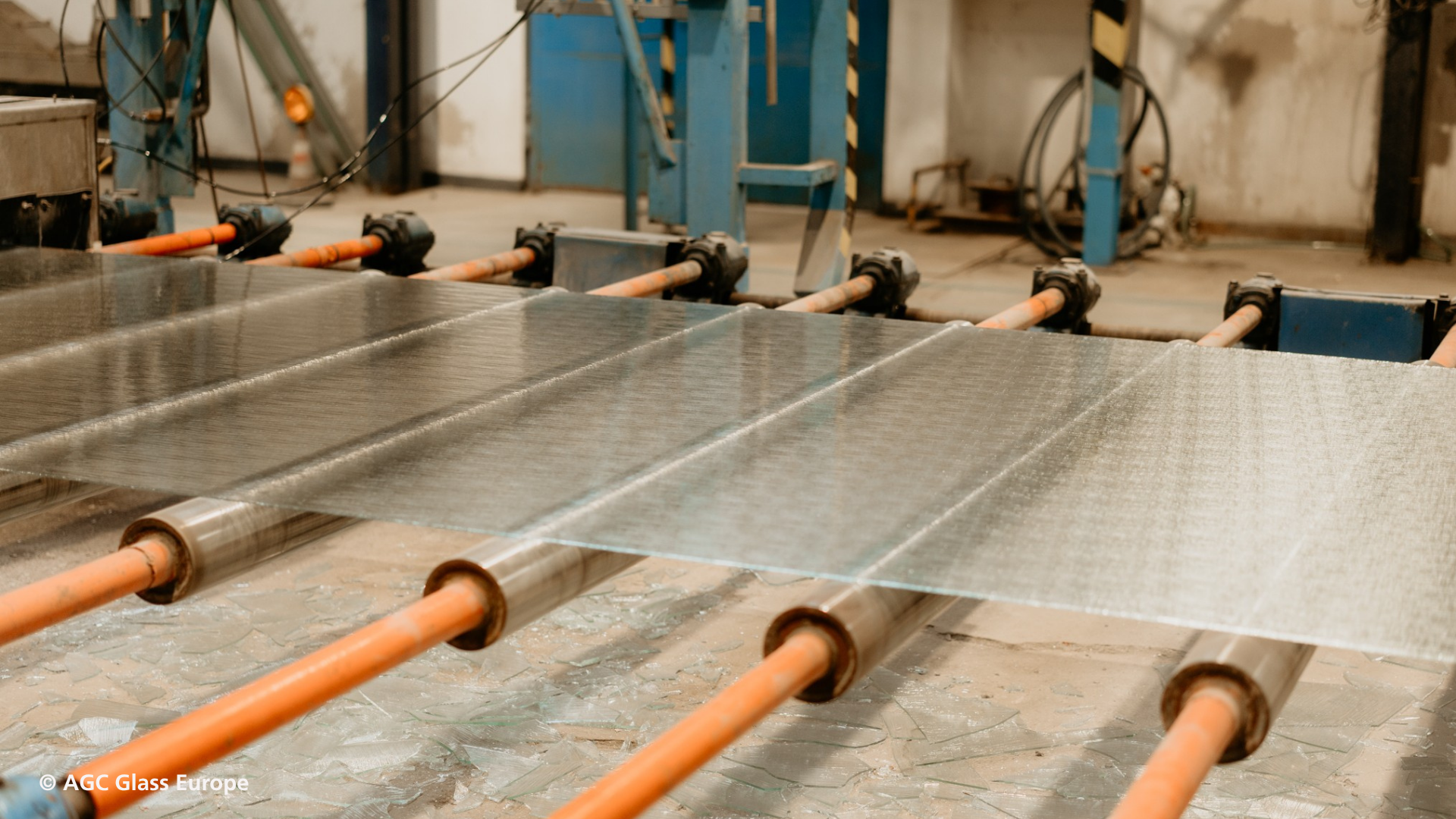
The VOLTA pilot furnace has now completed one full year of continuous operation, marking a decisive milestone in the demonstration of hybrid melting for flat glass. Since its start-up in early 2025, the pilot has delivered stable and consistent production, providing strong technological validation of the robustness of the hybrid concept.
Over the year, operational performance fully met design expectations. Energy consumption, temperature control and glass quality at the level of float glass were confirmed across a wide range of cullet ratios and pull rates. These results strengthen confidence in the scalability of the concept and support its suitability for future industrial-scale deployment.
The higher energy efficiency of the hybrid technology, combined with a 50% share of electricity (with certified renewable sourcing) and a significant increase in cullet use (88% in standard operation compared with 40% previously), delivers a 66% reduction in fossil fuel consumption and a 71% reduction in Scope 1+3 CO₂ emissions compared to reference (emissions related to gas and raw materials only, according to Innovation Fund accounting).
Moving toward large-scale deployment will require substantial investment, and ensuring a cost-effective balance between electricity and gas remains a key focus for the next phases of development.
These achievements are the result of the constructive collaboration between Saint-Gobain Glass and AGC, whose combined expertise has been instrumental to the success of the VOLTA project.
After this first successful year of operation, VOLTA stands as a validated technological platform and a solid cornerstone for industrial-scale extrapolation, supporting both companies’ progress toward low carbon flat glass production.